

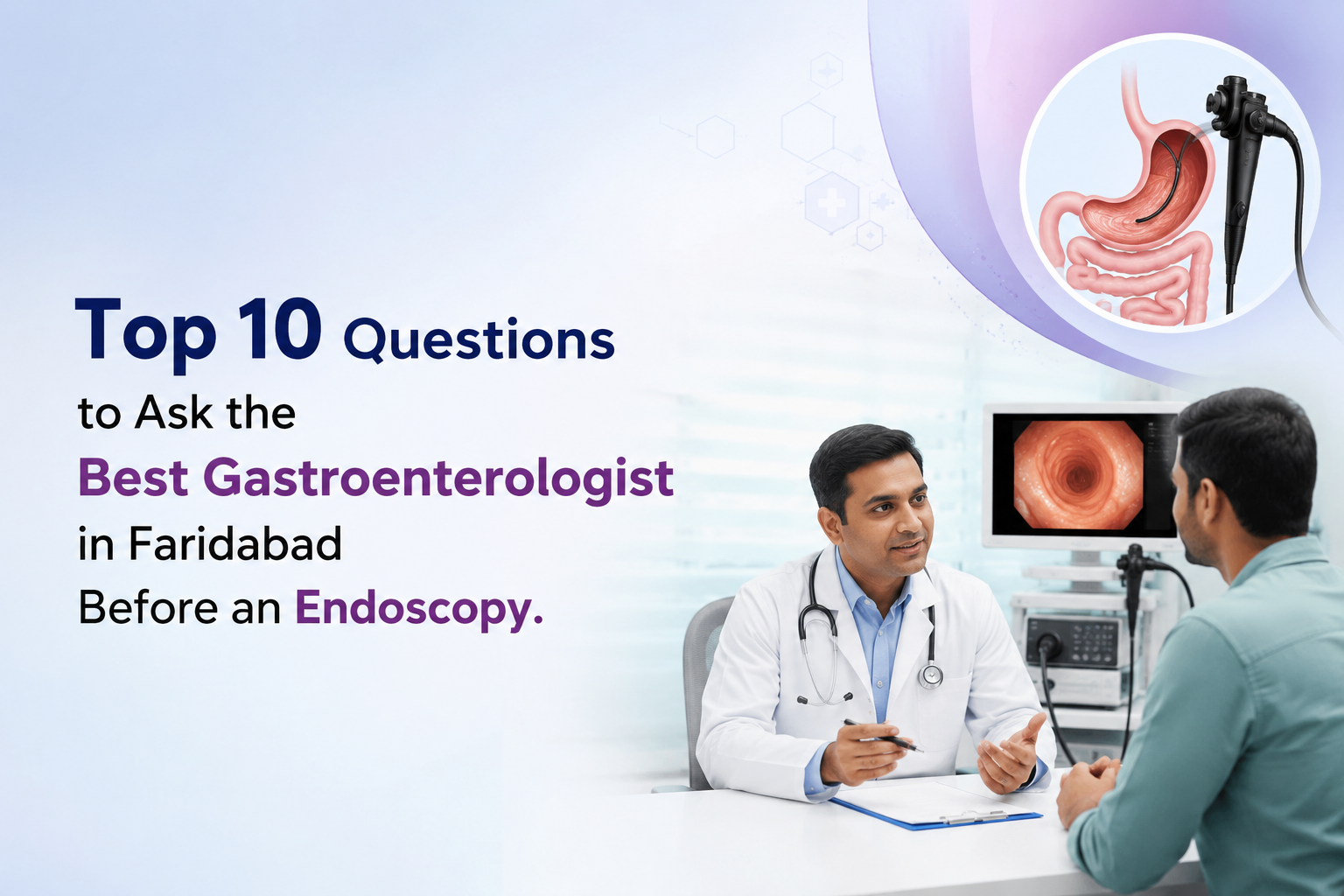
Being told you need an endoscopy can bring up a mix of nervousness and uncertainty — even though it’s one of the most common and safe procedures in gastroenterology. Whether it’s an upper GI endoscopy, colonoscopy, or a more specialised procedure like ERCP or endoscopic ultrasound, going in prepared with the right questions makes the entire experience far less intimidating. The best gastroenterologist in Faridabad for your procedure won’t just schedule the test — she or he will take the time to answer your questions clearly before you ever reach the procedure room.
Here are the 10 questions worth asking beforehand.
1. Why do I need this specific procedure, and what are you looking for?
Before agreeing to any endoscopic procedure, make sure you understand exactly why it’s being recommended. Is it to investigate specific symptoms, confirm a suspected diagnosis, monitor a known condition, or screen for something based on age or family history? A clear answer here helps you understand what the results might mean, either way.
Follow-up worth asking: “What would happen if I chose to delay this procedure?”
2. How many of these procedures have you personally performed?
This is a completely reasonable — and important — question to ask directly. Endoscopic procedures, particularly more advanced ones like ERCP or endoscopic ultrasound, are highly operator-dependent, meaning outcomes and safety are closely tied to the specialist’s experience and volume of cases.
Dr. Ram C Soni, Chairman of Gastroenterology & Hepatology at Accord Superspeciality Hospital, Faridabad, has performed more than 100,000 therapeutic endoscopies, colonoscopies, ERCPs, and endoscopic ultrasounds over his career — a volume that reflects significant hands-on experience across both routine and complex cases.
3. What type of sedation or anaesthesia will be used?
Most endoscopic procedures involve some form of sedation to keep you comfortable. Ask specifically what type will be used, what the experience will feel like, and how long the effects will last — this matters for planning your day, especially around driving and returning to work.
4. How should I prepare beforehand?
Preparation varies significantly by procedure. For a colonoscopy, this typically involves dietary restrictions and a bowel-cleansing regimen in the days before; for an upper GI endoscopy, it’s usually simpler fasting instructions. Ask for clear, written instructions, and clarify what happens if you accidentally don’t follow them precisely (for instance, eating something you shouldn’t have the night before).
5. What are the risks associated with this specific procedure?
Endoscopic procedures are generally very safe, but like any medical procedure, they carry some risk — including rare possibilities like bleeding or perforation, and reactions to sedation. A transparent specialist will walk you through these risks honestly, along with how likely they actually are, and how they’d be managed if something unexpected occurred.
6. Will you be able to treat anything you find during the same procedure?
Many endoscopic procedures are both diagnostic and therapeutic — meaning if a polyp, bleeding site, or narrowing is found, it can often be addressed in the same sitting rather than requiring a second procedure. Ask whether this applies to your case, and what circumstances might require a follow-up procedure instead.
7. How soon will I get my results, and who will explain them to me?
Some findings (like polyps seen during colonoscopy) are visible immediately; others (like biopsy results) take days to come back. Clarify the expected timeline for each type of result, and confirm you’ll have a proper follow-up conversation to understand what the findings mean for you — not just a report left for you to interpret alone.
8. What does recovery look like immediately after the procedure?
Ask what to expect in the hours after — mild bloating, throat discomfort (for upper endoscopy), or grogginess from sedation are common and temporary. Also confirm whether you’ll need someone to accompany you home, since sedation typically means you shouldn’t drive yourself afterward.
9. What equipment and facility standards does the hospital follow?
Endoscopic procedures require properly sterilised equipment and a well-maintained facility to minimise infection risk. It’s entirely reasonable to ask about the hospital’s protocols — an experienced, transparent specialist and hospital will have clear, confident answers.
10. What will this cost, and what does that include?
Ask for a clear breakdown of costs — the procedure itself, sedation, any biopsies taken, and follow-up consultation. Clarify what your insurance is likely to cover and whether cashless claims are supported at the facility.
Why These Questions Make a Real Difference
Patients who ask these questions before their procedure consistently report feeling calmer going in, and more confident interpreting their results afterward. An endoscopy is a routine procedure for an experienced gastroenterologist — but for the patient, it’s often a first-time experience, and deserves the same clarity and reassurance every time.
A specialist who welcomes this kind of dialogue is also signalling something important about the overall care you can expect — before, during, and after the procedure.
What to Expect From a Consultation With Dr. Ram C Soni
Dr. Soni is known for a patient-centred, evidence-based approach — following proper examination and established clinical protocols before recommending any procedure, and taking the time to explain findings clearly afterward. His extensive experience spans the full range of diagnostic and therapeutic endoscopic procedures, including:
- Upper GI Endoscopy (Gastroscopy)
- Colonoscopy
- ERCP (Endoscopic Retrograde Cholangiopancreatography)
- Endoscopic Ultrasound (EUS)
- Capsule Endoscopy
- Single Balloon Enteroscopy (SBE)
- FibroScan for liver assessment
Frequently Asked Questions
Is endoscopy painful? Most patients experience minimal to no discomfort due to sedation. Some mild throat irritation (for upper endoscopy) or bloating (for colonoscopy) can occur temporarily afterward.
How long does an endoscopy procedure take? Most standard procedures take between 15 and 45 minutes, though this varies depending on the type of endoscopy and what’s found during the procedure.
Can I eat normally the same day after my procedure? This depends on the type of procedure and sedation used — your doctor will provide specific instructions, but many patients can resume a light diet the same day.
Book a Consultation Before Your Endoscopy
If you’ve been advised to undergo an endoscopic procedure and want a thorough, honest conversation beforehand, book a consultation with Dr. Ram C Soni at Accord Superspeciality Hospital, Faridabad. Bring this list of questions — an experienced, transparent specialist will welcome every one of them.